What Is a VIN?
Your Vehicle Identification Number is a unique 17-character code stamped into every car, truck, and SUV. It's the only way to check whether your specific vehicle, not just the model, has an open safety recall.
Why recalls are VIN-specific
Two vehicles that look identical on a dealer lot (same make, model, year, and color) can have completely different recall status. Recalls are tied to your individual VIN, not your model.
Production batches differ
A defective part is often installed only during a specific production window. Your VIN encodes your exact build date and component batch, so recalls target only the affected range, not every vehicle of that model.
Repairs are tracked by VIN
When a dealer completes a recall repair, they close the campaign against your specific VIN. A used vehicle that's already been repaired will show no open recall, but you can only know that by looking up the VIN.
Used cars carry old recalls
Open recalls transfer with ownership. If you bought a used vehicle, any unrepaired recalls from the previous owner are still your responsibility, and the free repair is still available to you.
Reading all 17 characters
Every position in a VIN has a specific meaning. Here's what each section tells you about your vehicle.
World Manufacturer Identifier (WMI)
Identifies who built the vehicle and where. The first character is the country of manufacture; the second identifies the manufacturer; the third specifies the vehicle division or type.
Vehicle Descriptor Section (VDS)
Describes vehicle attributes such as model, body style, engine type, and restraint system. Each manufacturer defines these positions differently, so a "4" in position 4 means something different across brands.
Check Digit
A mathematically calculated value (0–9 or X) used to verify the entire VIN is valid and hasn't been tampered with. NHTSA uses this to detect fraudulent VINs: if the check digit doesn't match, the VIN is invalid.
Vehicle Identifier Section (VIS)
Makes each VIN unique. Position 10 is the model year, position 11 is the assembly plant, and positions 12–17 are the sequential production number, the exact order in which your vehicle rolled off the line.
VINs never contain the letters I, O, or Q to avoid confusion with the numbers 1 and 0. If you see one of these letters in a VIN, it's a typo.
Where to find your VIN
Your VIN appears in several places on your vehicle and in your paperwork. Here are the most common spots, from easiest to hardest to access.
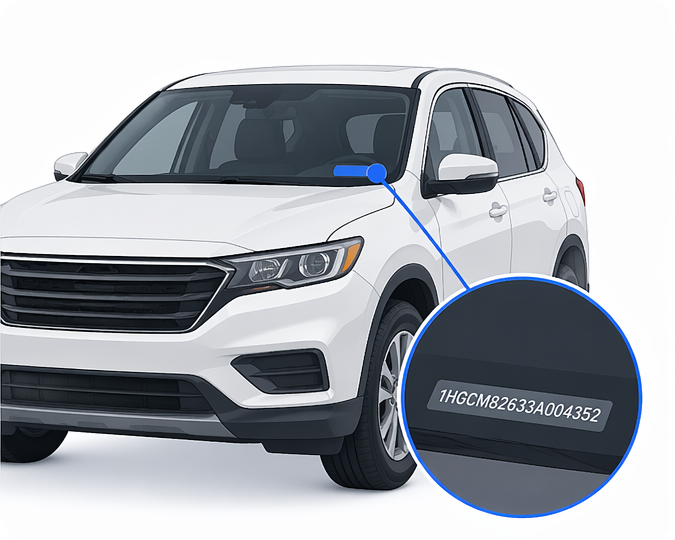
Dashboard (driver's side)
EasiestStand outside the car and look through the lower-left corner of the windshield. The VIN is on a small metal plate mounted to the dashboard, visible without opening the door.
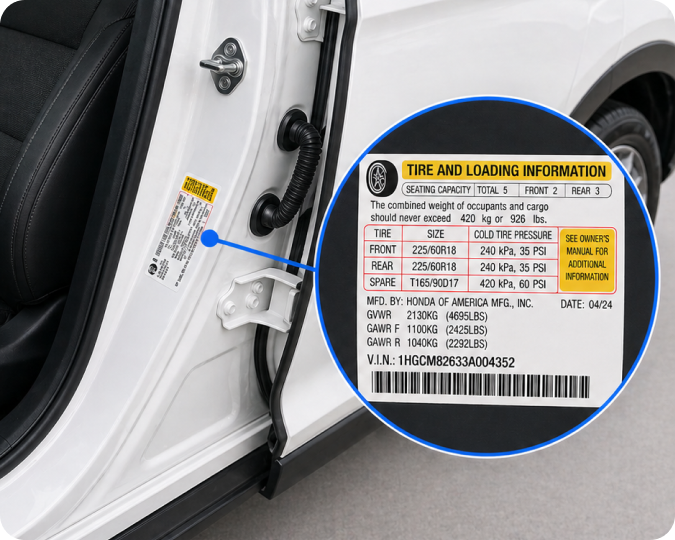
Driver's door jamb sticker
EasyOpen the driver's door and look at the door edge or door frame. The white or yellow sticker shows the VIN along with tire pressure, load rating, and the manufacturing date.
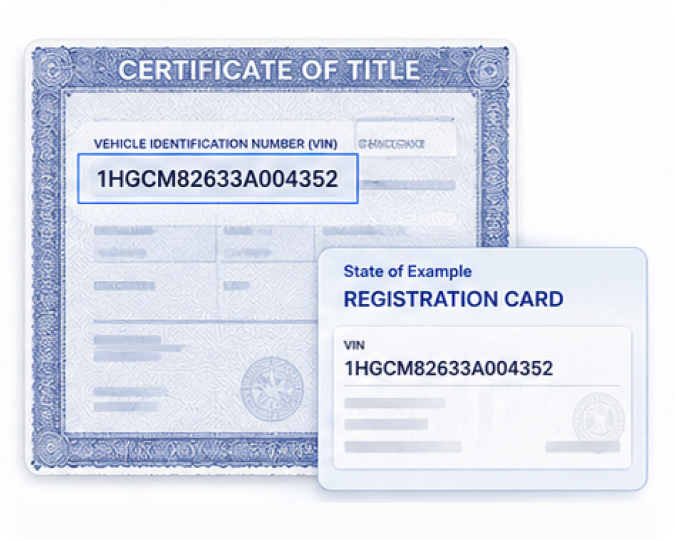
Vehicle title & registration
EasyYour state-issued title and current registration both list the full 17-character VIN. Handy if you can't physically reach the vehicle, for example when checking a used car before purchase.
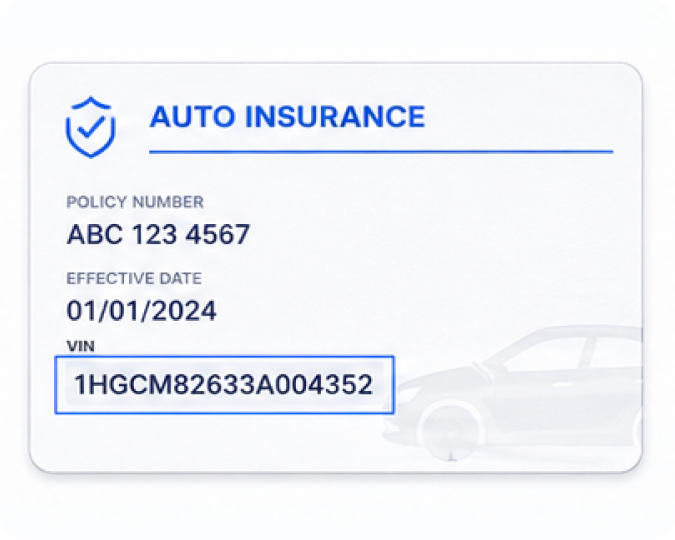
Insurance card or policy
EasyMost insurance ID cards and all policy documents include the VIN. Check your glove box; your insurance card is usually there. The VIN on file must match the actual vehicle.
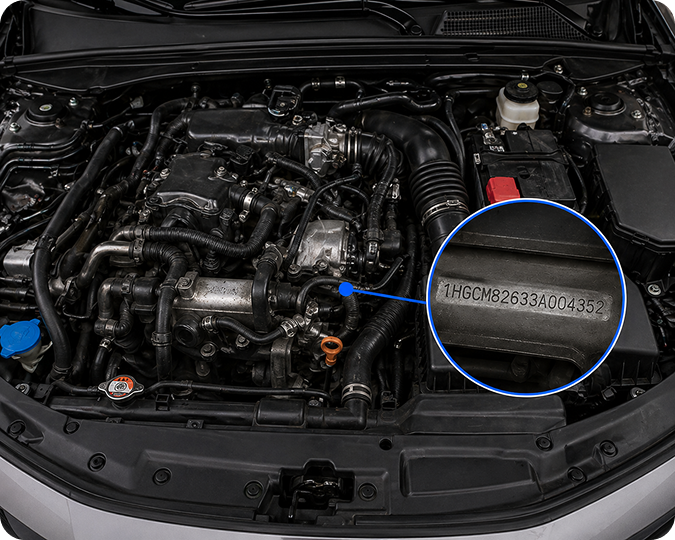
Engine block or firewall
Harder to AccessThe VIN is stamped into the engine block or the firewall, the metal wall between the engine and passenger compartment. This is the anti-theft location, harder to alter than the dashboard plate.
Using your VIN to check for recalls
Once you have your VIN, checking for open recalls takes less than a minute. Here's how.
Locate your VIN
Find your 17-character VIN on the dashboard, door jamb, or registration document. Double-check for common look-alike characters: VINs never include I, O, or Q.
Enter it on our homepage
Type or paste your VIN into the search bar at doihavearecall.com. We check your VIN against recall data from NHTSA and vehicle manufacturers, updated daily by RecallHQ.
See your results instantly
We'll tell you if your vehicle has any open safety recalls, what the defect is, the safety risk, and the status of the remedy. No account required, completely free.
Book your free repair
If you have an open recall, we'll show you franchise dealers near you where you can schedule the free repair. By federal law, every recall fix is completed at no cost to you.
Common VIN questions
Can I check a VIN before buying a used car?
Yes, and you should. Any open recalls transfer with the vehicle when it's sold. Enter the seller's VIN in our search before completing a purchase to see if it has unresolved safety campaigns.
Is my VIN the same as my license plate number?
No. Your license plate number is assigned by your state DMV and can change when you move or renew registration. Your VIN is permanent; it's stamped into the vehicle at the factory and never changes.
What if my VIN is only 13 characters?
The 17-character standard was adopted in 1981. Vehicles built before that year may have shorter VINs. Our recall database focuses on 1981 and newer vehicles, which follow the standardized format.
Is it safe to share my VIN?
For recall checks, yes. Your VIN is visible to anyone who walks past your parked car (through the windshield). It doesn't contain financial information, your address, or personal data, just vehicle specifications.
Can I look up a recall by make and model instead?
You can search by license plate or VIN on our site. While NHTSA publishes broad recall campaigns by model, the only way to know if your specific vehicle is affected (and whether it's already been repaired) is to look up the VIN.
Why does the recall check ask for my VIN and not just my model year?
Recalls target specific production batches, not entire model years. Two 2020 Ford F-150s built one month apart can have different recall status depending on which components were installed during that production window.